The US Goes It Alone on the Seabed
Washington aims to decide by mid-December whether The Metals Company can take a step toward mining the deep Pacific seabed, sidestepping the UN body that has overseen the international seabed for three decades.
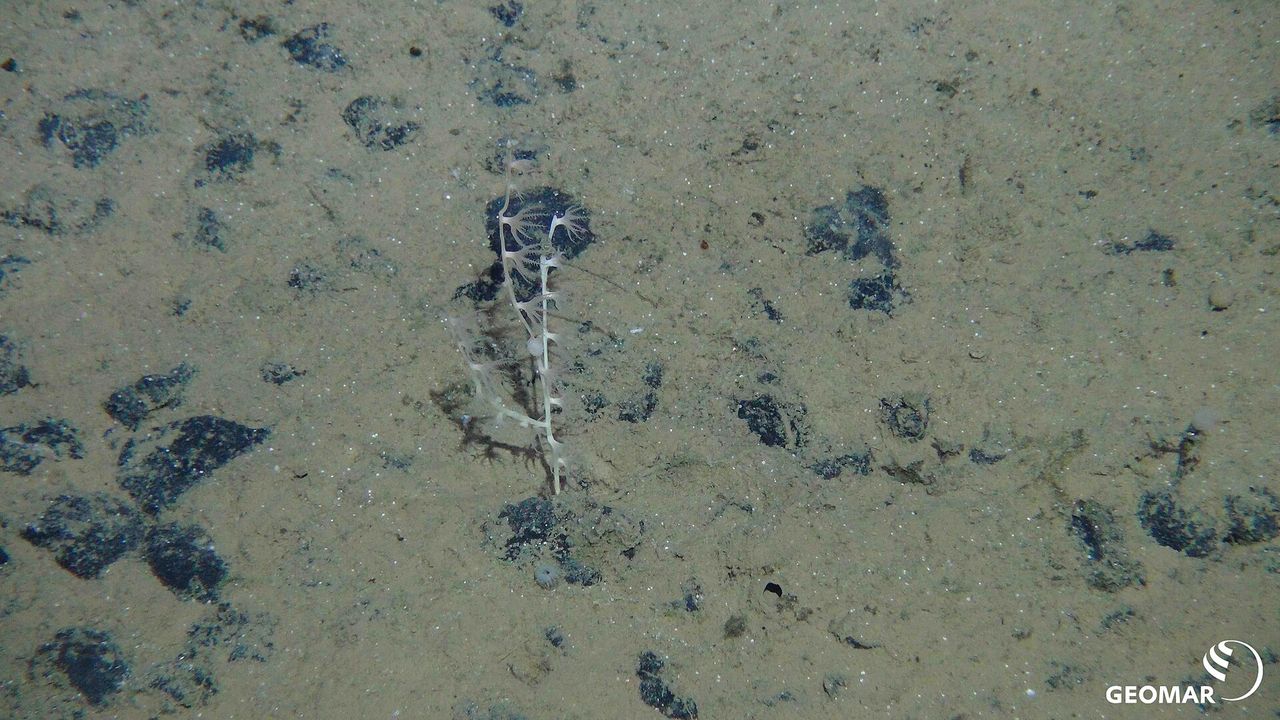
Four to five kilometres down on the seabed between Hawaii and Mexico lie billions of nodules, each about the size of a potato. They hold nickel, cobalt, copper and manganese, metals that battery makers want. The area is known as the Clarion-Clipperton Zone (CCZ). Since it lies in international waters, it comes under the UN's International Seabed Authority (ISA).
Now a Canadian company is trying a different path.
The Application
The US subsidiary of The Metals Company (TMC USA) filed a consolidated application with the US National Oceanic and Atmospheric Administration (NOAA) on 6 February 2026, combining an exploration licence and a commercial recovery permit.2 According to reports, the area it covers is about 65,000 square kilometres, close to three times what the original 2025 application sought.5
The application rests on a US law from 1980, the Deep Seabed Hard Mineral Resources Act (DSHMRA). The United States has never ratified the UN Convention on the Law of the Sea.3 An executive order from April 2025, "Unleashing America's Offshore Minerals and Resources," gives the effort political backing.2
The steps taken so far:
- 1 May: NOAA determines that the application fully complies with the law's information requirements, which allows the review to continue.1
- 19 August: NOAA starts a 60-day public comment period. Neil Jacobs, NOAA's administrator, says his agency is proud "to set the global standard for science-based deep sea mining practices."2
- 13 and 19 October: A virtual public hearing is scheduled for 13 October;2 on 19 October the comment period closes. In total, more than 1,600 comments come in.4
- 3 November: NOAA writes to TMC that it expects to make its decision on so-called certification by mid-December, which is later than TMC had hoped.4
The key point is that certification does not yet mean mining is permitted. An environmental impact statement and further rounds of public consultation would come after it. Gerard Barron, TMC's chief executive, expects to have the permit "by this time next year," and the company is aiming to commission its offshore collection system in the fourth quarter of 2027. Finances add to the time pressure: TMC had 79.3 million US dollars in cash left at the end of September.4
The Opposition
The Conservation Council for Hawaiʻi and the Center for Biological Diversity, with Earthjustice representing them, filed suit against NOAA on 30 September. What they are challenging is the agency's certification of a TMC exploration application, the first under the law since President Trump took office. The plaintiffs argue that the agency did not make relevant materials, including studies of environmental effects, available for the public to review. "NOAA short-circuited the law in its haste to jump-start an untested, speculative industry," says Chris Eaton, an attorney at Earthjustice.3
Around the world, the move has drawn objections. Sofia Tsenikli of the Deep Sea Conservation Coalition describes the application as "a direct challenge to international law." Around 170 countries have ratified the Law of the Sea convention,5 and 45 countries are now calling for a moratorium or a precautionary pause on deep-sea mining.6
What Is at Stake
Few ecosystems on Earth have been explored as little as the abyssal plains of the CCZ. Many of the species living there have never been described, and the nodules themselves, which mining would strip away, are an important habitat. Scientists warn of noise, light, sediment plumes and heavy metals that might spread far beyond the mined areas, and of harm that would not recover on any human timescale.38
The IUCN Red List update of July 2026 illustrates how fragile deep-sea life is: 62 percent of mollusc species that live only at hydrothermal vents are threatened, chiefly because of deep-sea mining.7 Those are hot vents, not nodule fields, but the finding shows how limited these habitats can be. It is still open whether a future ISA mining code would also apply to vents and seamounts.
TMC counters with its own research, which it says shows that effects on biodiversity and sediment plumes stay within the area mined directly.5
The UN Authority Stalls
Since 2014, the ISA has been negotiating rules for commercial mining, known as the Mining Code. Once again, its council session in Kingston from 13 to 24 July 2026 closed without a deal. Points of dispute include how financial benefits should be shared and whether binding standards should be passed together with the code. Negotiations pick up again in March 2027.6
Paradoxically, in July the ISA also extended by five years the exploration contract held by NORI, a TMC subsidiary. Meanwhile, it is looking into whether TMC companies are still meeting the terms of their ISA contracts. The International Tribunal for the Law of the Sea ruled on 18 July that this inquiry can go on.6
Why It Matters Beyond the Pacific
The case would set a precedent. Should the United States permit mining in international waters, other countries might do the same, and what the Law of the Sea calls the common heritage of mankind would turn into a race among individual nations. Whether the shift to batteries even needs these metals is also disputed: newer battery chemistries such as sodium-ion cells need neither nickel nor cobalt.
The first decision is expected in mid-December. Ecodemia will report.
Sources
- TMC: NOAA finds application in full compliance (1 May 2026)investors.metals.co
- NOAA: review of first-ever commercial recovery application (19 Aug 2026)noaa.gov
- Earthjustice: lawsuit against NOAA (30 Sept 2026)earthjustice.org
- MLQ: NOAA decision moved to mid-December, TMC financesmlq.ai
- Oceanographic: application and reactionsoceanographicmagazine.com
- Mongabay: ISA session, July 2026news.mongabay.com
- IUCN Red List 2026-1iucn.org
- WRI: deep-sea mining explainedwri.org
Found an error? We correct it and note the change. Corrections policy