The Power Hunger of AI: What Data Centres Really Use, and Emit
Around 1.5 percent of the world's electricity goes to data centres, and that demand could more than double by 2030. A new study traces where the emissions come from; German and Swiss figures show how the two countries compare.
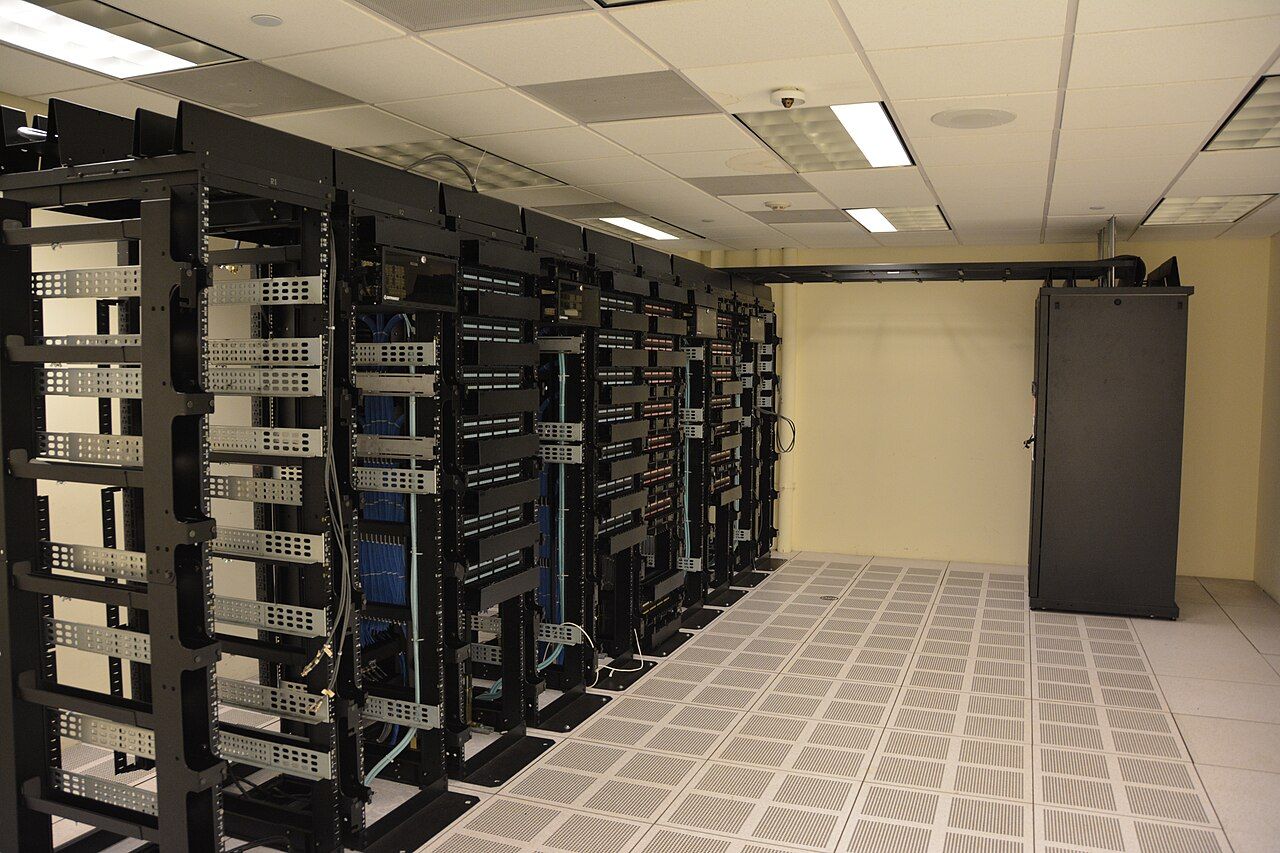
Whenever a chatbot answers a question, an image is generated or a new AI model is trained, the work ends up as electricity drawn by a data centre. How large that load really is has become one of the most contested questions in energy policy, and the estimates are far apart.
The global picture
In 2024, data centres consumed about 415 terawatt hours of electricity, roughly 1.5 percent of global consumption, the International Energy Agency (IEA) estimates. Of that, 45 percent was used in the United States, 25 percent in China and 15 percent in Europe. Since 2017, the sector's consumption has risen by about 12 percent a year, more than four times the growth rate of electricity use overall.1
By 2030, the IEA expects demand to more than double to around 945 terawatt hours, a little more than Japan uses in total today, with AI as the main driver. A typical data centre built for AI consumes as much power as 100,000 households, and the biggest ones now being built will consume 20 times that.1
Data centre consumption grew by around 17 percent in 2025. That is a big step, yet at roughly 70 terawatt hours it was modest next to the overall rise in global electricity demand of about 800 terawatt hours. In the United States, by contrast, data centres were responsible for about half of all growth in electricity use.2
Across the world, the IEA attributes around one-tenth of electricity demand growth until 2030 to data centres, less than it attributes to industrial motors, air conditioning or electric cars. In advanced economies, where demand barely moved for decades, data centres account for more than 20 percent of the growth.1
Why the estimates differ
Any forecast hinges on how fast AI is taken up, how much more efficient chips and models get, and whether power plants and grids can keep pace. For that reason, the IEA works with several scenarios. It also estimates that around 20 percent of the data centre projects now planned could face delays unless grid bottlenecks are addressed.1
Reliable data are also scarce. "Even though there were a lot of [public and scientific] statements about the environmental impact of data centers, when we started this research, we realized that there was basically very little, if none, peer-reviewed data," says Francesca Dominici, who directs the Harvard Data Science Initiative.3
Where the emissions come from
Her team has now published, in the journal Nature Sustainability, one of the first estimates made facility by facility. With the help of satellite imagery, the researchers located 403 hyperscale data centres in the United States and estimated their electricity use from May 2024 to April 2025 at between 68 and 99 terawatt hours. Fossil fuels, mostly natural gas and coal, supplied more than half of that electricity, resulting in an estimated 25.7 million tonnes of CO₂, about as much as Denmark emits in a year.3
Where a data centre stands matters a great deal. Using the same amount of power, data centres in Wyoming produce about seven times as much CO₂ as data centres in Oregon, where the grid is cleaner. "So these environmental impacts are not necessarily inevitable. Geography matters," says Gianluca Guidi, the lead author.3 The researchers add that the true figures are probably higher, since they could not include every site and others have opened since the study period.3
Germany and Switzerland
According to the digital industry association Bitkom, data centres and smaller IT installations in Germany are likely to need around 23 billion kilowatt hours of electricity in 2026. Connected IT capacity is due to reach 3,300 megawatts this year, about 1,200 megawatts of it in Hesse. Bitkom expects AI and high-performance computing to use 20 percent of capacity in 2026 and 55 percent by 2035. Investment in German data centres is forecast to grow by 57 percent this year, to a record 23.5 billion euros.4
Under Germany's Energy Efficiency Act, data centres must meet requirements on energy efficiency, waste heat and renewable electricity. A reform approved by the federal cabinet in June 2026 would relax some of these. Among other things, existing data centres would need a power usage effectiveness of 1.6 rather than 1.5 from July 2027. When the law firm CMS published its analysis, the Bundestag had not yet voted on the changes.6
Swiss data centres consumed 2.1 terawatt hours of electricity in 2024, about 3.6 percent of the country's total, a study commissioned by EnergieSchweiz, a programme of the Swiss Federal Office of Energy, found. Consumption is projected to grow to between 2.5 and 3.2 terawatt hours by 2030. The study estimates the untapped efficiency potential at about 0.8 terawatt hours, close to 38 percent of consumption. So far, AI plays only a small part: Switzerland has no data centres built to train large language models.5
A physical technology
As a share of global electricity use, data centres are small, but they cluster in a few locations and their demand is rising quickly. How big their climate footprint becomes depends on where they are built and what powers them. "We tend to imagine AI as something that is almost immaterial, but in the end, the infrastructure power is profoundly physical," Guidi says.3
Sources
- IEA: Energy and AI, executive summaryiea.org
- IEA: Global Energy Review 2026, electricity demandiea.org
- TIME on Guidi et al., Nature Sustainability (16 Nov 2026)time.com
- Bitkom: data centres in Germany 2026 (3 Nov 2026)bitkom.org
- Swiss Federal Council / EnergieSchweiz: data centres in Switzerland (7 May 2026)admin.ch
- CMS: reform of Germany's Energy Efficiency Act (1 July 2026)cms.law
Found an error? We correct it and note the change. Corrections policy