Sucking CO₂ From the Air: The Reality Check
Machines that pull carbon dioxide out of the air are supposed to help the world reach net zero. In six months, the largest plant now running removed 675 tonnes, and the largest project has slipped once more. Switzerland is relying on the technology.
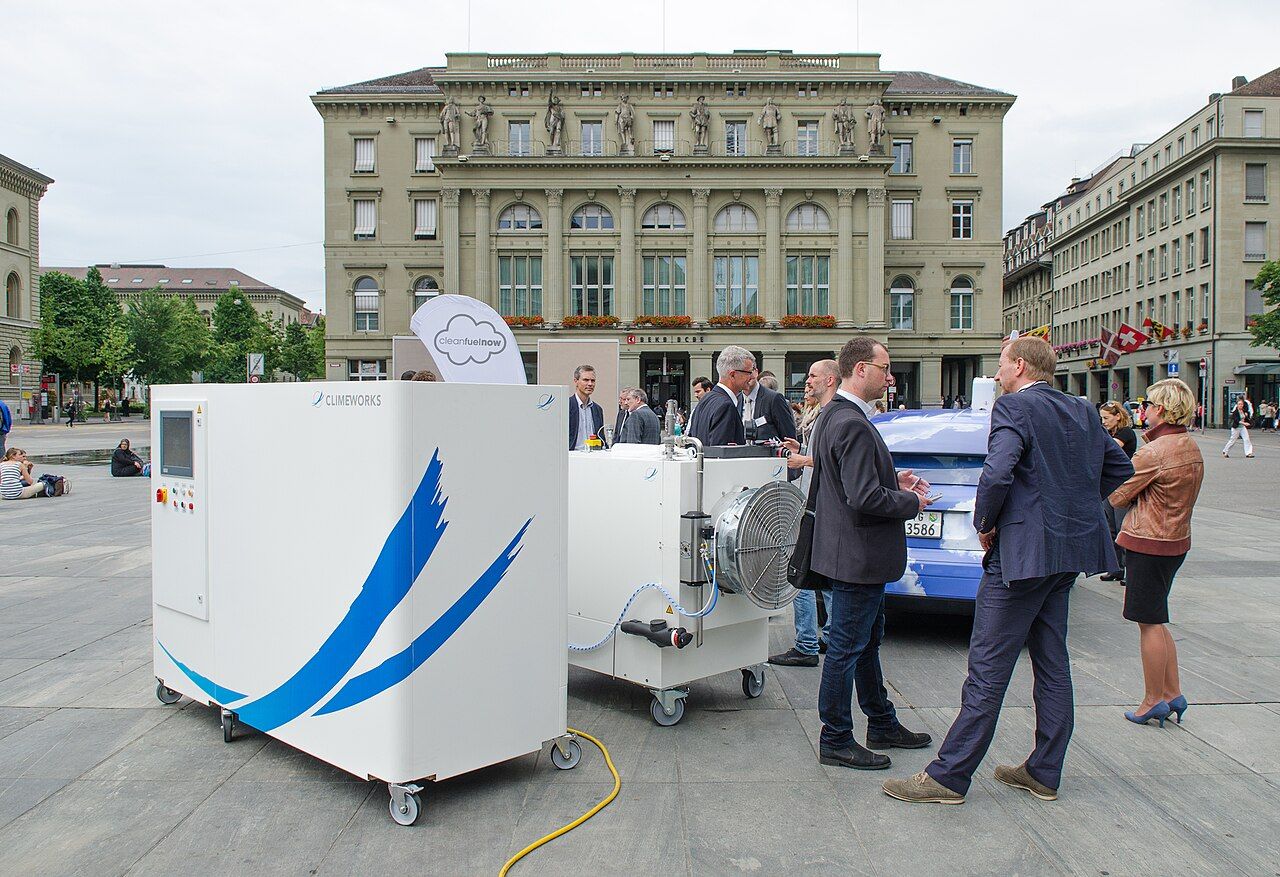
On paper, it is straightforward. Fans pull in air, a filter material captures the carbon dioxide, and the CO₂ is then locked away for good, deep underground or in minerals. The International Energy Agency (IEA) counts direct air capture (DAC) as one of the two main carbon removal methods in operation today, the other being bioenergy with carbon capture and storage.1 In reality, scaling the technology up is turning out to be harder than its supporters expected.
Small amounts, high costs
The IEA estimates that all types of carbon removal together can currently pull around 1 million tonnes of CO₂ a year out of the air. Projects that are already being built could increase direct air capture capacity 50-fold, and if every announced project goes ahead, total removal capacity could rise almost 80-fold by 2035.1
At present, the technology does not come cheap. The IEA puts the cost of current DAC projects at an estimated 500 to 1,900 US dollars per tonne of CO₂. Improved materials and larger plants could cut that to around 300 dollars by the middle of the century, and some next-generation designs are targeting 100 dollars. In biorefineries, where CO₂ is more concentrated, capture costs an estimated 40 to 50 dollars per tonne.1
Mammoth: far below capacity
The largest direct air capture plant in operation anywhere, Mammoth in Iceland, belongs to the Swiss company Climeworks and started up in 2024. It can remove up to 36,000 tonnes a year but has so far operated far below that level. Climeworks said in September that Mammoth removed 675 tonnes of CO₂ in the first half of 2026, nearly six times the amount of a year before. Improvements to the plant's design and its filter material had more than halved the operating cost per tonne, the company said, without revealing what that cost is.2
Jan Wurzbacher, co-founder and co-CEO, speaks of a change of course. Back when Mammoth was being planned, investors wanted speed and volume "at almost any cost", he told Bloomberg. "It was really a volume game." Performance, he said, is now the priority.2
The rest of the sector is under the same pressure. BloombergNEF counts more than 100 direct air capture start-ups founded in recent years, with projects that could together total 4.5 million tonnes of annual capacity by 2035. The research firm says many of them are unlikely ever to be built.2
Stratos: delayed again
The biggest project of all, Stratos in West Texas, is meant to remove up to 500,000 tonnes of CO₂ each year. Occidental Petroleum, which is developing it, had first aimed to have it running by the end of 2024. In May 2026, the company announced yet another delay after it found a problem with some of the plant's components.3 By August, Occidental was saying it expects operations to begin at the end of 2026.4
Why net-zero plans still count on it
The size of the challenge makes today's plants look tiny. According to the Global Carbon Project, emissions from fossil fuels reached 38.1 billion tonnes of CO₂ last year. Researchers led by Matthew Gidden of IIASA estimated in 2024 that keeping warming below 2 degrees could require several billion tonnes of carbon removal a year by the middle of the century.2
Switzerland, where Climeworks is based, is among the countries planning on that basis. Its long-term climate strategy foresees that by 2050 around 12 million tonnes of CO₂ a year will have to be captured at the source or taken from the air and then stored, almost 30 percent of what the country emits today. On top of that, the Federal Council expects international aviation to need up to 2 million tonnes of negative emissions a year. As the country's own storage capacity is limited, it intends to send CO₂ abroad for storage or to purchase negative emissions from other countries.5
The Swiss government is clear that removal is meant to add to emission cuts, not replace them: it is intended for emissions that are hard to avoid, for example from cement, waste incineration, agriculture and aviation.5 Direct air capture does work, but at the scale of hundreds of tonnes, while the climate problem is counted in billions.
Sources
- IEA: Driving down the cost of carbon removal (27 Oct 2025)iea.org
- Bloomberg via Energy Connects: Climeworks increases CO₂ capture sixfold (10 Sep 2026)energyconnects.com
- E&E News: Opening of world's largest carbon removal plant delayed (7 May 2026)eenews.net
- E&E News: World's largest carbon removal plant to open at the end of 2026 (7 Aug 2026)eenews.net
- Swiss Federal Office for the Environment: CO₂ capture and storagebafu.admin.ch
Found an error? We correct it and note the change. Corrections policy