Solar Takes the Lead: The Biggest Source of New Energy for the First Time
Solar power met more of the world's rising energy demand in 2025 than oil, gas or coal, something no modern renewable had done before. Austria and Switzerland, though, installed less than a year earlier.
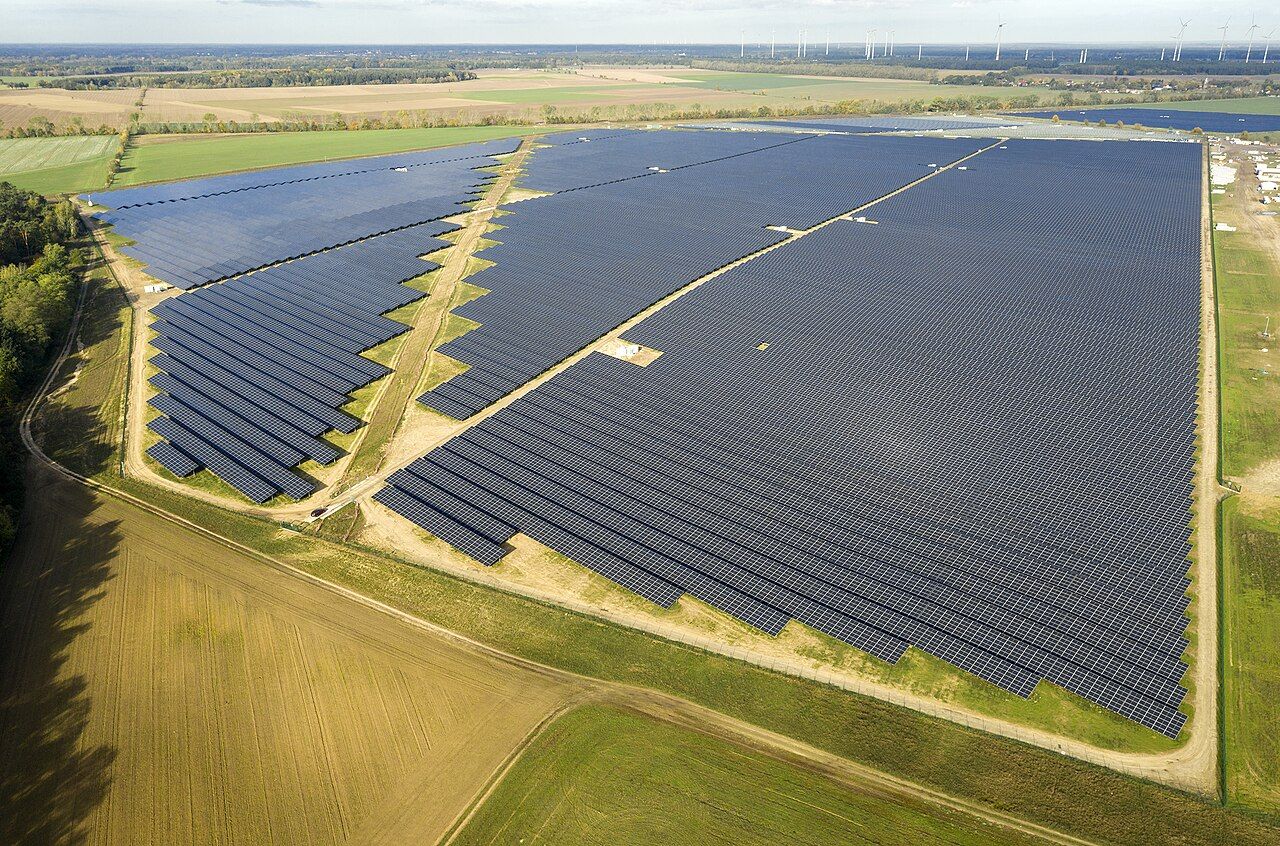
Never before has a modern renewable done more than any other source to meet the world's growing demand for energy. The International Energy Agency's Global Energy Review shows that solar covered more than 25 percent of the rise in global energy demand in 2025, ahead of natural gas at 17 percent. Taken together, low-emission sources, including solar, wind, nuclear and hydropower, supplied nearly 60 percent of the increase.1
Demand for oil, gas and coal kept rising, though at a slower rate than in 2024.1 Solar leads on growth; it does not yet lead on the total amount of energy the world uses.
Record after record
In 2025, solar power generation increased by 600 terawatt hours. According to the IEA, no source has ever added that much electricity in one year, leaving aside periods of recovery after a crisis. Around 70 percent of the growth in electricity generation came from solar alone, and all renewables together now generate nearly as much power as coal. In the European Union, solar and wind combined supplied 30 percent of electricity in 2025 and, for the first time, overtook fossil fuels.1
The construction figures are no less remarkable:2
- Worldwide: over 600 gigawatts of solar capacity added in 2025, bringing the total to around 2,800 gigawatts, more than for any other power technology. Thirty countries installed more than a gigawatt each.
- China: almost 370 gigawatts of solar, an increase of 13 percent on 2024.
- India: close to 50 gigawatts.
- United States: 49 gigawatts of renewable capacity overall, a drop of 10 percent from the previous year that was driven mainly by fewer solar installations.
- European Union: close to 70 gigawatts of solar. Germany accounted for 17 gigawatts, a quarter of the EU figure, and Spain set a record with 14 gigawatts.
At nearly 3 percent, electricity demand grew more than twice as fast as total energy demand in 2025, a shift the IEA describes as the world having entered the "Age of Electricity".1 No power technology grew faster than battery storage, of which almost 110 gigawatts were added, roughly 40 percent more than in 2024.1
The Alpine countries slow down
Austria and Switzerland are bucking the global trend. Figures from the regulator E-Control show Austria installing 1,634 megawatts of solar in 2025, down 22 percent on 2024 and well short of the 2,476-megawatt record set in 2023. To reach the national target of 100 percent renewable electricity by 2030, about two gigawatts would have to be added each year, says the industry association PV Austria. The industry points to the early end of a VAT exemption for small rooftop systems, long waits between subsidy rounds and too little grid capacity.4
In Switzerland, new installations dropped from 1,800 megawatts in 2024 to 1,333 megawatts in 2025, the first fall since 2017. Even so, solar met 13.71 percent of Swiss electricity consumption, and battery storage sales went up by 70 percent. Swissolar, the industry association, described the downturn as "an indication of the change in the electricity market and the uncertainty about federal energy and electricity policy".5
Too much at noon
The more solar panels are installed, the more often supply outstrips demand when the sun is out. Wholesale power prices in Germany, France, the Netherlands and Spain were negative in roughly 6 percent of all hours in 2025, compared with about 3 to 5 percent in 2024. In places where battery storage has expanded quickly, such as California and Texas, negative prices have become rarer.3
No other source is adding as much new energy as solar. How long it can keep up this pace will depend on storage, on demand that can shift to sunny hours and on grids able to absorb the power.
Sources
- IEA: Global Energy Review 2026, key findingsiea.org
- IEA: Global Energy Review 2026, solar PV and windiea.org
- IEA: Electricity 2026, prices chapteriea.org
- pv magazine: Austria's solar additions fell to 1,634 MW in 2025 (26 Mar 2026)pv-magazine.de
- pv magazine: Swiss solar additions fell to 1.33 GW in 2025 (10 July 2026)pv-magazine.de
Found an error? We correct it and note the change. Corrections policy