Steel Forests at Sea: The Baltic's Offshore Wind Push, Four Years In
Eight Baltic countries promised in 2022 to multiply their offshore wind seven times over by 2030. Poland's first large wind farm now supplies the grid, while tenders in other places are stuck.
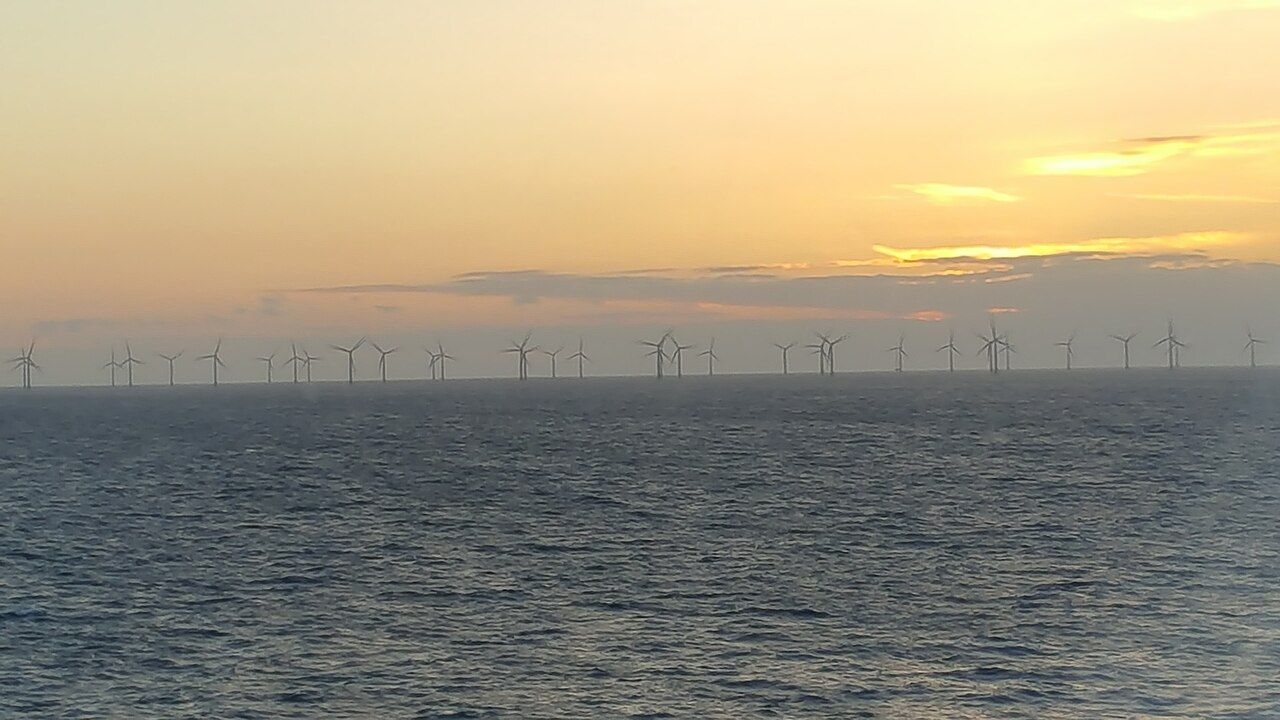
The Baltic Sea offers wind planners good conditions: shallow water, steady wind, short distances to the coast and hardly any tides. That is why, in August 2022, only a few months after Russia invaded Ukraine, the countries bordering it set themselves an ambitious target.
The Marienborg Pledge
Denmark, Estonia, Finland, Germany, Latvia, Lithuania, Poland and Sweden agreed in the Marienborg Declaration of 30 August 2022 to increase offshore wind in the Baltic to at least 19.6 gigawatts by 2030. That would mean multiplying the 2.8 gigawatts installed at the time by seven.1 The declaration puts the Baltic's total potential at up to 93 gigawatts.1
Where the Build-Out Stands
Regional capacity had only risen to about 3.1 gigawatts by 2023.2 Things have been moving faster since:
- Poland: On 10 July 2026, electricity from the Baltic Power wind farm reached the Polish grid for the first time.3 All 76 turbines have since been installed, and completion is expected in 2026. Its capacity is 1.14 gigawatts, under a licence for up to 1.2 gigawatts.4 It is the first offshore wind farm to supply power in Poland.3
- Lithuania: Only one bidder, the utility Ignitis, entered the second tender for 700 megawatts, so it was declared void in October 2025. Whether and when a new tender follows is up to the government.5
- Denmark: The plan is for the Bornholm energy island to carry power from 3 gigawatts of wind farms to Denmark and Germany.6
No current total for the Baltic has been published by the countries. For Europe as a whole, the industry association WindEurope now expects that only around 70 of the planned 120 gigawatts of offshore wind will be built by 2030.7 The Baltic is also likely to fall short of its 19.6-gigawatt target unless the pace increases markedly.
What Is Holding It Back
It takes years to get from a political pledge to electricity flowing into the grid. There are shortages of grid connections and subsea cables, specialised installation vessels, ports with heavy-load quays, and skilled workers. Costs have also gone up, and some tenders offer investors too little, as the Lithuanian case shows.
The Opportunity: Grids Across Borders
The most promising development crosses borders: in hybrid projects, a wind farm is connected to two countries at the same time and also serves as a power line between them. One early case is the link via the Danish Kriegers Flak and German Baltic 2 wind farms, which has been able to move electricity between the two countries since 2020. Bornholm is intended to apply that principle at a larger scale.
Should the build-out succeed, the Baltic will go from a sideshow to one of Europe's important power plants, and to a piece of independence from gas imports.
Sources
- Danish energy ministry: Marienborg Declaration (31 Aug 2022)en.kefm.dk
- BOWE2H roadmap: 2023 capacityena.lt
- Polish climate ministry: electricity is now flowing from Baltic wind farms (10 July 2026)gov.pl
- Northland Power: Baltic Powernorthlandpower.com
- OE Digital: Lithuania scraps second tender (8 Oct 2025)oedigital.com
- Bornholm Energy Islandbalticenergyisland.com
- WindEuropewindeurope.org
Found an error? We correct it and note the change. Corrections policy