Earth's Carbon Vaults: Why Peatlands and Wetlands Matter, and Why They Are Disappearing
Peatlands take up only a few percent of the land, yet store twice the carbon of all the world's forests. Once drained, they stop storing carbon and start releasing it. Germany is a textbook example.
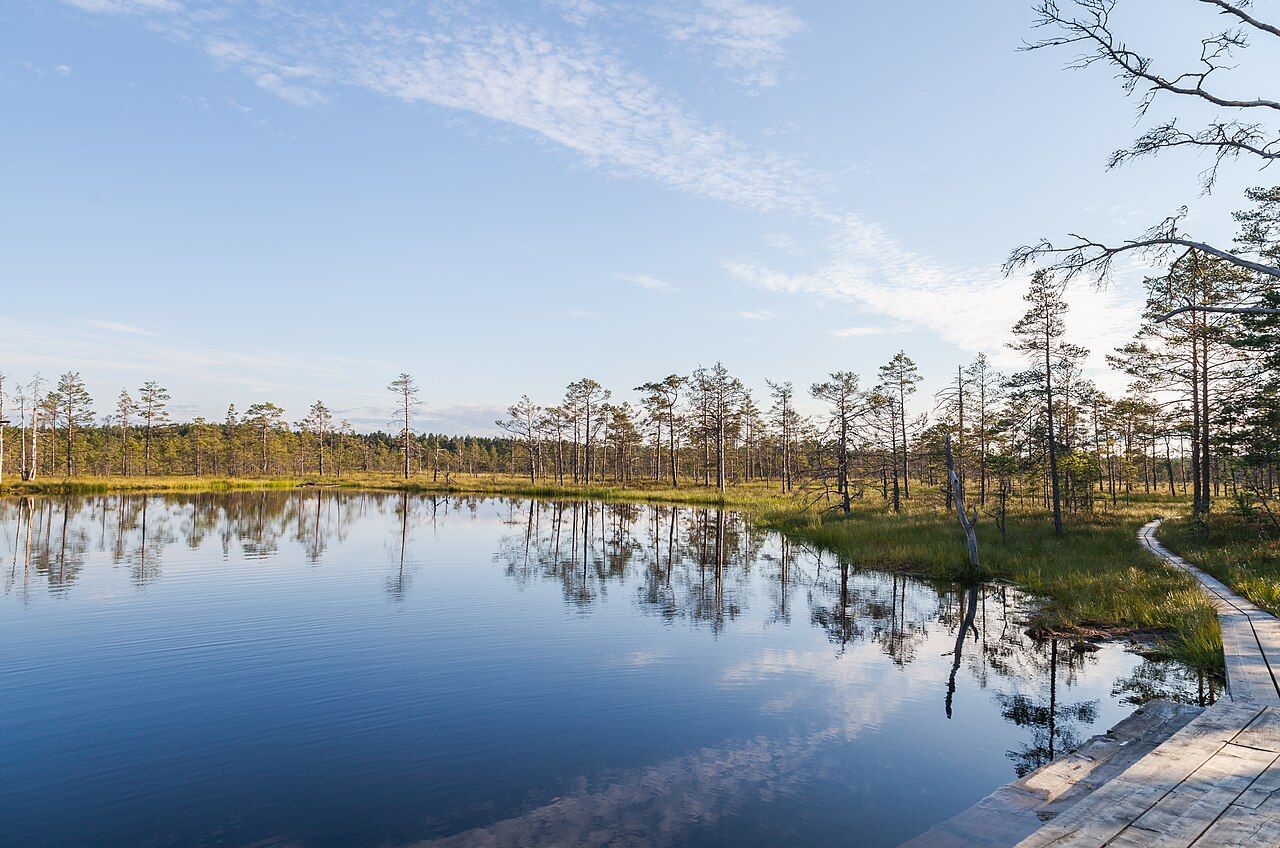
Peat builds up slowly. Where bogs and fens stay waterlogged all year, dead plants never fully decay, and over thousands of years they accumulate into a deep, wet layer of carbon. That is why such modest-looking landscapes count for so much in the climate, and why draining them has such consequences.
Small area, huge store
Although peatlands cover only about 3 to 4 percent of the planet's land surface, they hold up to a third of the world's soil carbon, twice as much as all its forests.1 Peatlands occur in 177 of the 193 UN member states and are home to more than 1,000 vulnerable, endangered and critically endangered plant and animal species.1
The carbon stays locked in for as long as the ground stays wet. Drain the water, and air gets into the peat, which begins to decompose and releases its carbon as CO₂. Already, degraded peatlands are responsible for about 4 percent of global greenhouse gas emissions from human activity.1 The UN Environment Programme says about 500,000 hectares of intact peatland, around 0.1 percent, are lost every year. Drainage for farming, livestock and oil palm plantations, especially in the tropics, is the main cause, along with thawing permafrost.1
Wetlands are vanishing faster than any other ecosystem
Peatlands are one kind of wetland. Counting marshes, swamps, floodplains, mangroves and lakes as well, wetlands cover about 6 percent of the Earth's surface, yet through services such as clean water, flood protection and food they contribute more than 7.5 percent of global GDP.2 The Global Wetland Outlook 2025, published by the international Convention on Wetlands, finds that 22 percent of wetlands have disappeared since 1970 and that they continue to shrink by an average of 0.52 percent a year. A quarter of the remaining wetlands are in poor ecological condition.2
Should the trend continue, as much as 20 percent of the remaining wetlands could be gone by 2050, putting benefits worth an estimated 39 trillion US dollars at risk.2 "Wetlands bankroll the planet, yet we are still investing more in their destruction than in their recovery," said Musonda Mumba, secretary general of the convention.2
Wildlife is paying the price. Between 1970 and 2020, monitored populations of freshwater species in WWF's Living Planet Index fell by 85 percent on average, a steeper decline than on land or in the oceans.3
Germany: a nation of drained bogs
Germany illustrates what large-scale drainage means. Over 92 percent of its peatlands have been drained, and nearly three-quarters of those are farmed. They account for only 7 percent of farmland but for about 37 percent of the agricultural sector's emissions.4 Altogether, Germany's drained peatlands emit around 53 million tonnes of CO₂ equivalent a year, roughly 7.5 percent of national greenhouse gas emissions.4
Intact peatlands, on the other hand, hold as much carbon on 5 percent of Germany's land area as all German forests together. Only about a tenth of the country's peatlands still do that job.5 Under the national peatland strategy, adopted in 2022, emissions from peat soils are to fall by at least 5 million tonnes a year by 2030. The strategy relies on voluntary rewetting, backed by financial incentives for farmers and compensation for lost income.5
Wet farming
Rewetting means lifting the water table high enough that the peat no longer breaks down, which leaves no room for potatoes, grain, maize or conventional grazing.4 In the view of the German Environment Agency, this does not endanger food security: farmed peat soils are a small share, whereas almost three times as much cropland grows energy crops for biofuels.4
The alternative is called paludiculture, or wet farming. Reeds, reedmace and sedges can be harvested for insulation and building materials, black alder can be grown for forestry, and water buffalo can graze rewetted meadows.4 Because most peatland is in private hands, the agency wants stronger financial incentives to win over landowners.4
EU law is adding pressure. The Nature Restoration Regulation requires member states to take measures on 30 percent of drained agricultural peatland by 2030, with at least a quarter of that rewetted. By 2040 the share rises to 40 percent and by 2050 to 50 percent, at least a third of it rewetted each time.6
Peat takes thousands of years to form and only decades to disappear. The UN Environment Programme describes protecting peatlands as a cost-effective climate solution.1 Restoring drained peatlands is one of the few ways to turn a source of emissions back into a carbon store.
Sources
- UNEP: Global Peatland Hotspot Atlas (Nov 2024)unep.org
- Convention on Wetlands: Global Wetland Outlook 2025global-wetland-outlook.ramsar.org
- WWF: Living Planet Report 2024worldwildlife.org
- German Environment Agency (UBA): paludiculture and rewetted peatlands (2023)umweltbundesamt.de
- German government: National Peatland Protection Strategy (2022)bundesregierung.de
- Regulation (EU) 2024/1991 on nature restoration (EUR-Lex)eur-lex.europa.eu
Found an error? We correct it and note the change. Corrections policy