The Great Green Wall at 19: Has Africa's Barrier Against the Sahara Taken Root?
The idea was a belt of trees reaching from Senegal to Djibouti. Now the Great Green Wall is measured in restored land, jobs and carbon, and the figures vary with who does the counting.
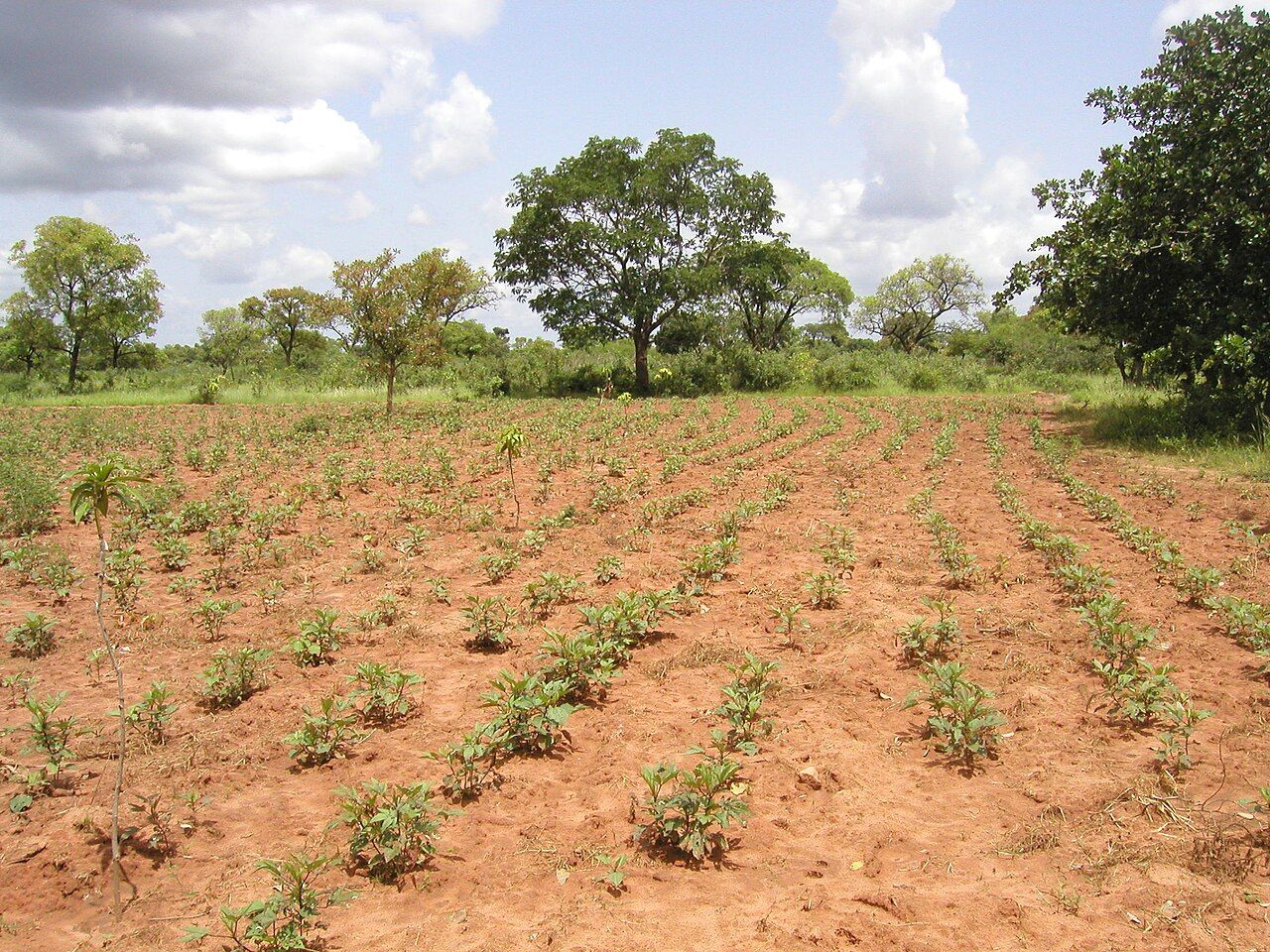
The African Union and the UN Convention to Combat Desertification (UNCCD) started the Great Green Wall in 2007 with a picture anyone could grasp: a strip of trees running across the continent from the Senegal River basin in the west to the Horn of Africa in the east, keeping the Sahara at bay.1 Nineteen years on, those in charge tell a rather different story, and there is more than one answer to how much has really been done.
Is the Sahara really growing?
The worry behind the project has a basis. A University of Maryland team went through rainfall records for 1920 to 2013 and treated as desert any land receiving roughly 100 millimetres of rain a year or less. On that definition, the Sahara grew by about 10 percent over those years, and by almost 16 percent in summer.5 The study finds that natural climate cycles in the Atlantic and the Pacific account for around two-thirds of the growth. The other third the authors put down to climate change, though they caution that longer records are needed to be certain.5
The desert did not only advance northwards; it crept south too. In the Sahel, the semi-arid strip along its southern rim, Lake Chad is drying out, something Sumant Nigam, the study's senior author, described as "a very visible footprint of reduced rainfall".5
From a wall of trees to a mosaic
The Great Green Wall region spans 156 million hectares. Burkina Faso, Chad, Djibouti, Eritrea, Ethiopia, Mali, Mauritania, Niger, Nigeria, Senegal and Sudan are its 11 founding countries.1 Their aims for 2030 are 100 million hectares of land restored, 250 million tonnes of carbon stored and 10 million jobs created.4
Planting trees is now just one element. In August, UN Deputy Secretary-General Amina Mohammed said the initiative had moved on from the notion of a row of trees to an African-led strategy that ties restoration to food production, jobs and economic opportunity.2 The UNCCD now speaks of a mosaic of restored landscapes, farms, water systems and communities.1
How much has been restored?
The answer depends on what gets counted:
- 4 million hectares: According to the first status report, from 2020, about 4 million hectares had been rehabilitated inside the initiative's strict intervention zones, or 4 percent of the 100-million-hectare goal. Across the wider region, including 12 million hectares under restoration in Ethiopia alone, the total came to nearly 17.8 million hectares.3
- More than 20 million hectares: Speaking at the UNCCD conference in Mongolia in August 2026, Mohammed said more than 20 million hectares had been restored "through efforts associated with the initiative and beyond its original corridor", five million of them regenerated by farmers in Niger.2
- 1.66 million hectares: The Great Green Wall Accelerator, a coordination platform created in 2021, marked five years with a report listing 1.66 million hectares under restoration, 24 million tonnes of CO₂ equivalent sequestered or mitigated, 4.6 million jobs and 46 million people reached. More than 389 projects are tracked by its monitoring system, yet fewer than 90 of them report data in the agreed format, so the UNCCD describes the gains as early and points to significant gaps in reporting.1
The 2020 report also spelled out what success would require: restoring 8.2 million hectares a year, at a cost of 4.3 billion US dollars annually.3
Where did the money go?
Donors pledged more than 19 billion US dollars at the One Planet Summit in 2021.1 How much of that has actually arrived on the ground is contested. In 2025, a study in the journal Land Use Policy examined Senegal, a country often presented as a model. Of the 870 million dollars donors pledged from 2011 to 2019, only 149 million reached beneficiaries.4
The ecological gains there were meagre. Satellite imagery and field surveys of 36 reforestation plots in northern Senegal found notable greening on just two, and only one of those did better than rainfall alone would explain. Communities nearby did gain from seasonal work and social services.4 Annah Lake Zhu of Wageningen University, the lead author, told Mongabay that the wall is largely symbolic, a dream in the minds of donors, politicians and the public, and that "if it remains a dream, it risks becoming a mirage".4 Frustration runs high among African officials as well. "So, where is this $19 billion?" asked Abakar Mahamat Zougoulou, scientific and technical director of the Pan-African Agency of the Great Green Wall.4
What works
Farmers, rather than tree nurseries, often deliver the best results. Mohammed said farmers in Niger have regenerated five million hectares.2 Worldwide, as much as 40 percent of land is degraded, and the UN estimates that of the 355 billion dollars needed each year, only about 77 billion is being invested.2
Mohammed also tied restoration to security in the Sahel and the Lake Chad Basin, where conflict compounds the strain of drought. "Restoring land will not end conflict. But it can help restore the livelihoods and opportunity that give people a stake in peace," she said.2
Four years before the deadline, even the highest of these figures is about a fifth of the 100-million-hectare target. In the end, the Great Green Wall will be judged less on hectares than on whether the restored land stays productive, and whether the people who live there feel the benefit.
Sources
- UNCCD: Five years of the Great Green Wall Accelerator (6 Aug 2026)unccd.int
- UN News: Land degradation is costing far more than restoring (25 Aug 2026)news.un.org
- UNCCD: Great Green Wall status report (2020)unccd.int
- Mongabay on Zhu et al., Land Use Policy (2025)news.mongabay.com
- University of Maryland: the Sahara is expanding (Thomas & Nigam, Journal of Climate, 2018)sciencedaily.com
Found an error? We correct it and note the change. Corrections policy