Plug-In Power: Germany Passes 1.4 Million Balcony Solar Systems
Plug-in solar has become a mass-market product, thanks to looser rules, a new product standard and legal protection for tenants. Here is what you may install, what you can expect from it and what to look out for before you buy.
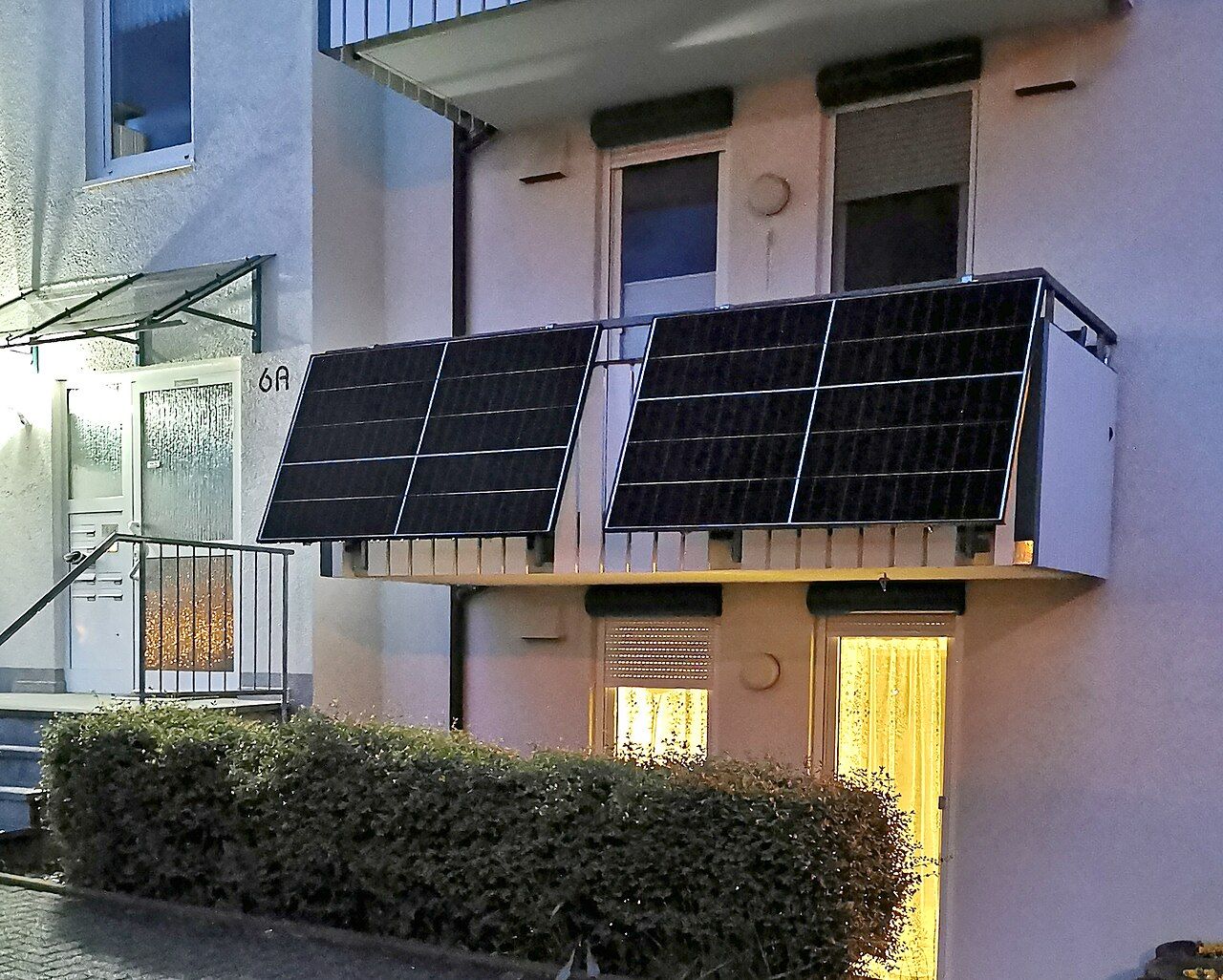
Clip a panel to the balcony railing, push the plug into a socket, and you are generating power: few climate technologies are as easy to get into as the plug-in solar device, which Germans call the "balcony power plant." That simplicity is precisely what turned it into a mass product in the country.
The Numbers
In mid-April 2026, the Federal Network Agency's market master data register listed about 1.31 million plug-in solar devices, an analysis by Strom-Report found.1 The supplier kleines kraftwerk put the count at about 1.49 million by early September in its own analysis.2 The true total is likely higher: registration is compulsory,6 yet model estimates suggest plenty of devices never get recorded.1
The systems themselves are growing. The same analysis shows that close to half of the devices registered in 2026 use four panels rather than two.2
What Has Been Allowed Since 2024
A series of legal changes has made getting started easier:
- Output: Up to 800 watts may flow from the inverter into the household circuit, while the panels attached to it may add up to as much as 2,000 watts.3
- Registration: All that is needed is a simplified entry in the market master data register, made within a month of switching the device on.6
- Tenants and owners: Plug-in solar devices have been classed as a privileged structural change since 2024. That rules out a blanket refusal by landlords or owners' associations, although they can still have a say on how the panels are fixed.56
- Standard and plug: For devices without storage, the product standard DIN VDE V 0126-95 has applied since 1 December 2025. It allows an ordinary household (Schuko) plug as long as panel output does not exceed 960 watts. Anything above that requires a special energy plug.4
What a Balcony System Delivers, and What It Doesn't
One device can cover a share of a household's base load, such as the fridge, the router and appliances on standby. The savings depend on which way the panels face, on shading and on how much power the household uses during daylight hours. Electricity that is not used usually goes into the grid unpaid; in practice, almost no plug-in device receives a feed-in payment.35 That is why a balcony system cannot replace a rooftop array. For many tenants, however, it is the only realistic way to produce solar power of their own.
What to Check
Germany's consumer advice centres recommend getting the landlord's or owners' association's consent in advance.3 Berlin's SolarZentrum advises checking that the device has a CE mark and complies with the grid connection standard VDE-AR-N 4105.5 For registration, what counts is the inverter's rated output.6 The new standard does not yet cover devices that come with battery storage.3
Sources
- Strom-Report: balcony systems in the market master data registerstrom-report.com
- kleines kraftwerk: 2026 figureskleineskraftwerk.de
- Verbraucherzentrale: laws and standards for plug-in solarverbraucherzentrale.de
- pv magazine: VDE product standard publishedpv-magazine.de
- Berlin SolarZentrum: balcony solar for tenantsberlin.de
- ADAC: registering a balcony systemadac.de
Found an error? We correct it and note the change. Corrections policy