Repairing a Continent: The Nature Restoration Law Meets Its First Deadline
By 1 September 2026, member states were supposed to submit draft plans for restoring damaged ecosystems. Many did not make it. What the law really demands, and where Germany and Austria stand.
For a long time, conservation law played defence: it banned making a bad situation worse. The EU Nature Restoration Regulation (Regulation (EU) 2024/1991) turns that logic around. Member states now have a duty to actively repair damaged ecosystems, against measurable targets and to fixed deadlines. The regulation entered into force on 18 August 2024.2
What the Law Requires
- Overall target: At least 20 percent of the EU's land and sea areas must be covered by restoration measures by 2030, and every ecosystem in need of restoration by 2050.2
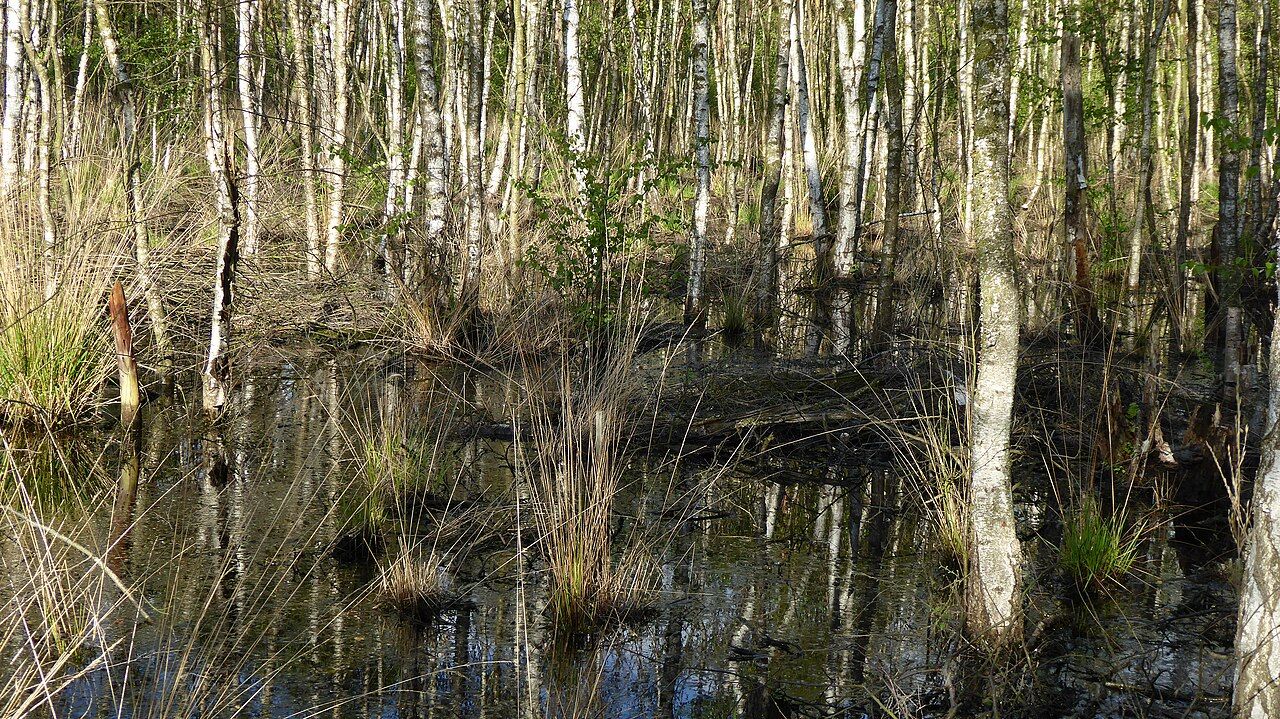
- Peatlands: On drained peat soils used for farming, measures must be under way on 30 percent of the area by 2030, with at least a quarter of that rewetted. By 2040 the share goes up to 40 percent and by 2050 to 50 percent, with at least a third rewetted each time.1 When peatlands are drained, they give off large amounts of CO₂.
- Rivers: At least 25,000 kilometres of rivers across the EU should be free-flowing again by 2030, for instance through the removal of barriers that are no longer needed.2
- Cities: Until the end of 2030, the national area of urban green space and tree canopy may not drop below where it stood in 2024, and after that it is meant to increase.1
- Pollinators: By 2030, the decline in wild bees, butterflies and other pollinators should be stopped and turned around.2
- Trees: Countries are expected to help reach the EU aim of three billion additional trees planted by 2030.1
Hardly any environmental law has drawn more opposition. Farm groups were worried about losing productive land, and the law passed Parliament by a narrow margin. As a result, the final text includes some flexibility, on rewetting for example.
The First Deadline
How each country will meet the targets is laid down in national restoration plans. Brussels needed the drafts by 1 September 2026. When the deadline passed, 20 member states had still not submitted a draft, Italy included, according to a tally by the news site Eunews. Spain handed in its plan on 31 August.3
Funding is also short. Researchers from the Biodiversa+ partnership put the yearly funding gap for implementation at around 65 billion euros, Euronews reports.4
Germany and Austria
Both countries have draft plans, and in both, critics say the drafts lean mainly on voluntary measures and existing programmes. Switzerland is not an EU member, so the regulation does not apply there.
Germany
From 25 April to 28 June 2026, the Federal Environment Ministry held a public online consultation on its draft National Restoration Plan.5 It is unclear whether the plan arrived in Brussels in time: according to a report from September, Germany's entry in the public EU register was still listed as "pending" early that month.6 For its part, the ministry gives September as the submission date and 2027 for the final plan.5
The draft was presented at the end of April by the Federal Environment Ministry and the Federal Agency for Nature Conservation.9 It was drawn up in existing working groups of the federal and state governments, because in nature conservation the federal government sets the framework and the states fill it in.8
The conservation group NABU welcomes the fact that a plan exists but finds it too vague. "It is good that the plan is finally here. But paper alone does not yet restore a single bog or bring back a single species," said NABU president Jörg-Andreas Krüger.9 NABU also criticises that for pollinators and urban ecosystems the draft lists only federal measures, because the states did not contribute their own programmes, and that key documents, such as Germany's definition of a free-flowing river, have not been made public.8
There is resistance from the other side as well. The German Farmers' Association objects to planned pre-emption rights for nature conservation, new categories of protected area and additional planning tools.9 The CDU/CSU group in the Bundestag wants the regulation repealed altogether, while Chancellery Minister Thorsten Frei (CDU) has repeatedly called it "right and important".9
The law is still under political pressure. In a letter to the European Commission, the conservative CDU/CSU agriculture ministers of several German states have called for the regulation to be scrapped entirely.7
Austria
Austria sent its draft to Brussels on time on 1 September, and the public could comment until 15 October.10 The federal government and all nine Länder prepared it together in a joint steering group. The plan relies on voluntary measures and on existing funding, such as the national plan for EU farm subsidies, the Biodiversity Fund and the Forest Resilience Fund.11
Some of the targets are concrete:11
- Rivers: Compared with 3,985 kilometres in 2020, the length of free-flowing rivers is to grow by 300 kilometres by 2030 and by 2,000 kilometres by 2050. Around 27,000 weirs and other barriers currently block fish.
- Floodplains: 25 square kilometres are to be restored by 2030 and 100 square kilometres by 2050.
- Peatlands: Measures are planned on 37.3 of the 124.4 square kilometres of drained peat soils used for farming by 2030, 9.3 of them as rewetting. The plan itself says it uses a lower rewetting share than the regulation foresees, citing conflicts such as flood risks in the city of Salzburg and in Vorarlberg's Rhine valley.
- Trees: About 3.08 million trees are to be added by the end of 2029, most of them through replanting after storms and other damage.
The ministry puts the cost up to 2050 at around 12.2 billion euros, but national funding is secured only until 2028 and EU funding only until 2027.11 Environment Minister Norbert Totschnig (ÖVP) stresses that key information on funding from the European Commission is missing: "I will not allow those who have farmed and cared for our natural and cultural landscape for generations to end up paying the bill for this EU law."10 The farmers' union Bauernbund praises the draft for containing "not a single additional mandatory measure".10
That is exactly what environmental groups and the Greens criticise. "Totschnig is turning restoration into a programme built on hope," said Leonore Gewessler, who leads the Green group in parliament.10 WWF Austria analysed the chapter on cities, which was submitted a few days after the rest of the draft. It lists 330 towns and municipalities, but only 26 of them are to make up for losses of green space by 2030, with a total of 13 hectares. In Carinthia, Salzburg, Tyrol, Vorarlberg and Vienna, all urban areas are left out of the count, and Lower Austria is missing from the list entirely.12 BirdLife, Naturschutzbund and the Umweltdachverband, an umbrella group of environmental organisations, say the central chapter on restoring protected habitats and species is largely missing, and that the results of almost two years of work in expert groups were only partly taken on board.13
What Happens Next
The Commission is expected to finish reviewing the drafts in spring 2027 and then send countries its feedback.5 The final plans have to be in by September 2027. Only then will it be clear whether the targets become concrete areas, budgets and responsibilities. No bog gets wetter because of a plan, but a plan does make inaction measurable.
Sources
- Regulation (EU) 2024/1991 on EUR-Lexeur-lex.europa.eu
- European Commission: Nature Restoration Regulationenvironment.ec.europa.eu
- Eunews: 20 countries behind schedule (2 Sept 2026)eunews.it
- Euronews: €65bn funding gapeuronews.com
- German Environment Ministry: national restoration planbundesumweltministerium.de
- Techzeitgeist: Germany and the deadlinetechzeitgeist.de
- Neue Landschaft: agriculture ministers demand repealneuelandschaft.de
- NABU: interim review of the national restoration plan (8 July 2026)blogs.nabu.de
- Klimareporter: what will become of Germany's damaged landscapes (11 May 2026)klimareporter.de
- MeinBezirk: Austria submits its draft (1 Sept 2026)meinbezirk.at
- Kommunal: what municipalities can expect (2 Sept 2026)kommunal.at
- WWF Austria: the cities chapter (12 Sept 2026)ots.at
- BirdLife, Naturschutzbund, Umweltdachverband: gaps in the draft (15 Sept 2026)ots.at
Found an error? We correct it and note the change. Corrections policy