The Carbon Border, Year One: How CBAM Works, and Why the First Bill Comes in 2027
Anyone importing steel, cement, aluminium, fertiliser, hydrogen or electricity into the EU has had to report the emissions behind those goods since January. The first payments are due next year, a case is pending at the WTO, and most small importers are exempt.
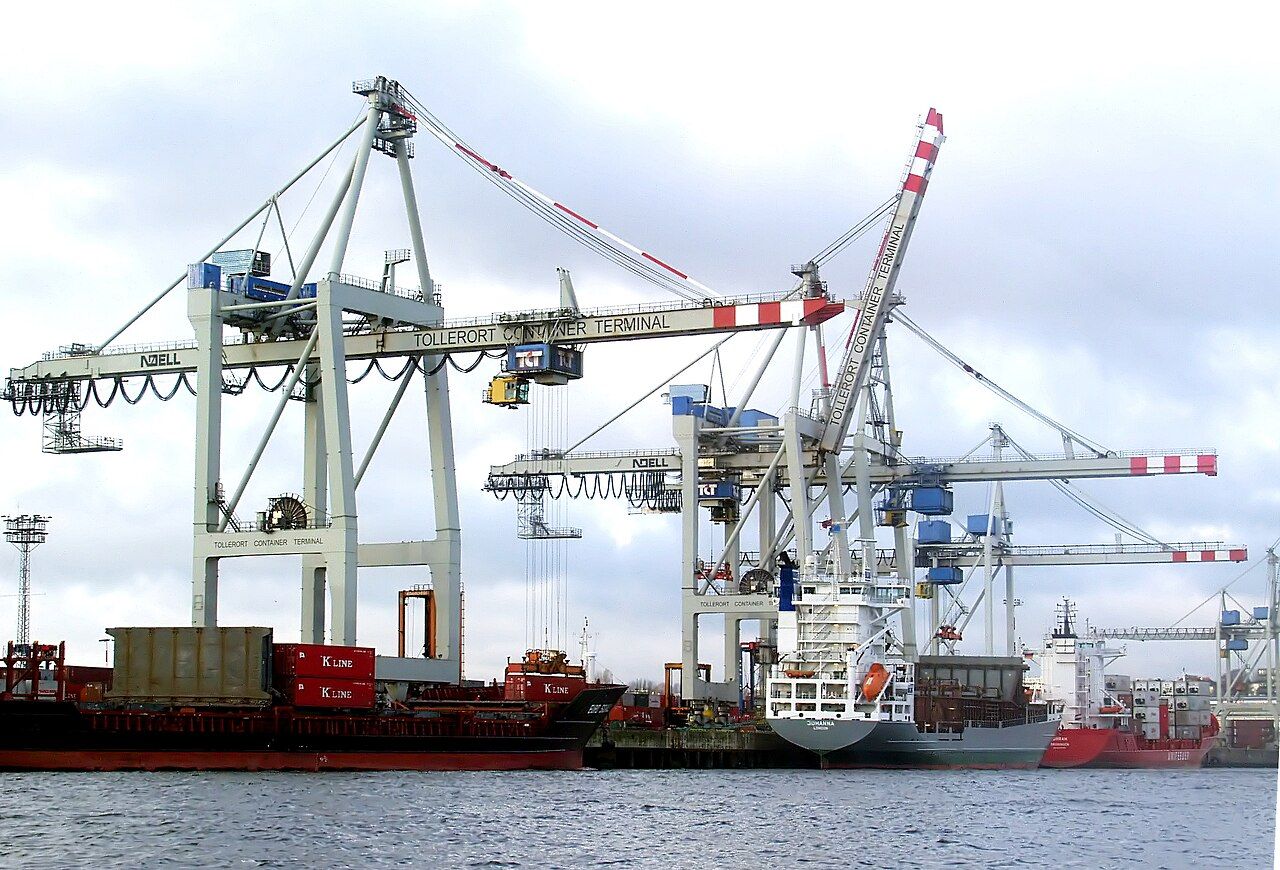
For a long time, European climate policy had a weak spot. A country that puts a price on emissions only at home risks driving emission-heavy production to other countries, which specialists call "carbon leakage." The climate would gain nothing from that, and European industry would pay the price. The Carbon Border Adjustment Mechanism (CBAM) exists to stop it.
What Has Applied Since January
The transitional phase, during which importers merely had to file reports, ended on 1 January 2026. Since then, the definitive system has been in force.2 Six groups of goods are covered: iron and steel, cement, aluminium, fertilisers, hydrogen and electricity.4
The main rules:
- Only authorised declarants are still permitted to bring these goods into the EU above the threshold, and for electricity and hydrogen from the very first import.1
- The 50-tonne threshold: A simplification agreed in autumn 2025 exempts importers who bring in less than 50 tonnes of CBAM goods per year. Once that threshold is crossed, every import counts towards CBAM, not only the amount beyond 50 tonnes.1
- Payment starts in 2027: No certificates are bought or paid for during 2026, although the cost of this year's imports already accrues.1 Certificates covering this year's imports go on sale on 1 February 2027. The first annual declaration must be filed, and the certificates surrendered, by 30 September 2027.3
- Price: Each certificate is priced like a tonne of CO₂ in the EU Emissions Trading System, based on a quarterly average of auction prices in 2026 and on a weekly average from 2027.23
Why the Charge Rises Slowly
Step by step, CBAM takes the place of the free emission allowances that European producers in the same industries still receive. The charge therefore rises as that free allocation is wound down: it applies to 2.5 percent of embedded emissions in 2026, to almost half by 2030, and to the full amount from 2034.4 A carbon price already paid in the country of origin can be deducted.
This deduction is where the instrument's real leverage lies. It makes it worthwhile for exporting countries to set up carbon prices of their own, since the money then goes into their own budgets rather than to the EU.
The Dispute at the WTO
Some trading partners do not see it as an incentive at all. Russia has taken the EU to the World Trade Organization (WTO),6 and in September 2026 the Dispute Settlement Body established a panel to hear the case.5 Among Russia's complaints are that national climate measures are not properly recognised and that EU default values are used.6
Eighteen WTO members, among them China, India, the United States and the United Kingdom, have reserved third-party rights. They are not co-complainants, but they can follow the case and make their own submissions.5 In China's view, CBAM conflicts with fundamental WTO principles, and developing countries suffer more of its spillover effects.7 India has told the WTO that CBAM amounts to an arbitrary or disguised restriction on trade.7
What Remains Open
Only from 2027, once certificates actually have to be purchased, will it become clear how hard CBAM bites. Three questions remain: whether the WTO accepts the instrument, whether trade shifts towards processed products that fall outside its scope, and whether a planned expansion is adopted. In December 2025, the Commission proposed extending CBAM from 2028 to about 180 downstream products with a high steel or aluminium content.28
Sources
- EY: EU adopts CBAM Omnibus Regulation (Oct 2025)ey.com
- ICAP: CBAM enters compliance phaseicapcarbonaction.com
- Irish EPA: CBAM certificatesepa.ie
- European Commission: CBAM guidancetaxation-customs.ec.europa.eu
- WTO: Dispute Settlement Body establishes CBAM panel (25 Sept 2026)wto.org
- Squire Patton Boggs: Russia's WTO claimssquirepattonboggs.com
- EST: responses from India and Chinaesthinktank.com
- EPRS: extension to downstream goodsresearch.europarl.europa.eu
Found an error? We correct it and note the change. Corrections policy